Engineered HVAC Tulsa climate management restores thermodynamic efficiency, indoor comfort, and environmental air quality during intense Green Country seasonal temperature swings. Precision diagnostics isolate mechanical, electrical, chemical refrigerant, and aerodynamic airflow performance anomalies across Tulsa County residential properties.

HVAC Tulsa is a precision climate control service that repairs, maintains, and installs residential heating, ventilation, and air conditioning systems across Tulsa, Oklahoma.
Every service reflects the same meticulous attention to detail — whether it's a single job or a larger hvac project across tulsa.
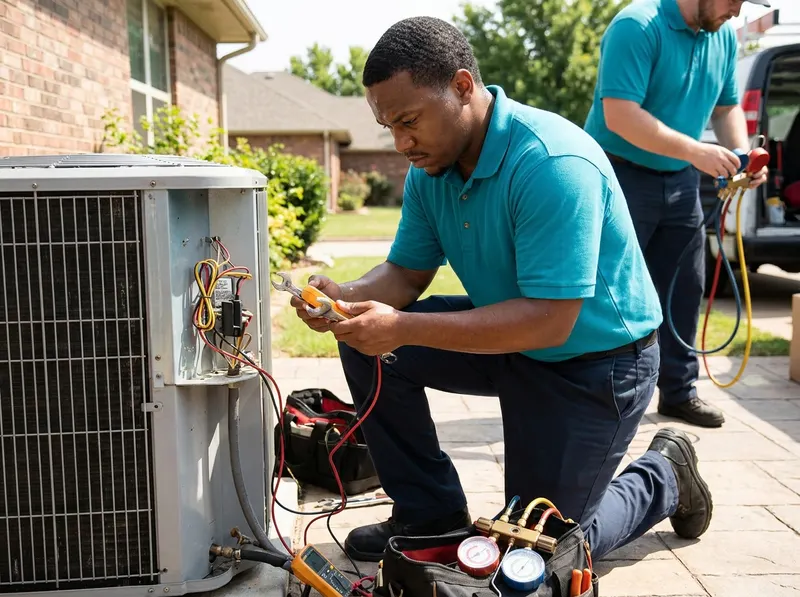
Analytical troubleshooting and component-level mechanical repair for residential air conditioning systems experiencing sudden failure during peak summer heat. Service begins with an on-site baseline diagnostic starting at $200, where technicians measure supply and return temperature splits, inspect compressor run capacitor microfarad ratings, evaluate contactor point pitting, and test blower motor amp draws. Technicians verify thermostatic expansion valve (TXV) superheat and subcooling levels against manufacturer charging charts to eliminate short-cycling and ice formation on indoor evaporator coils. All repair work utilizes industrial-grade replacement parts, including heavy-duty start kits, sealed ball-bearing condenser fan motors, and factory-matched relays. Transparent, fixed-price repair menus are provided before mechanical tasks commence, ensuring complete clarity without unexpected fees during emergency service dispatches.
View details →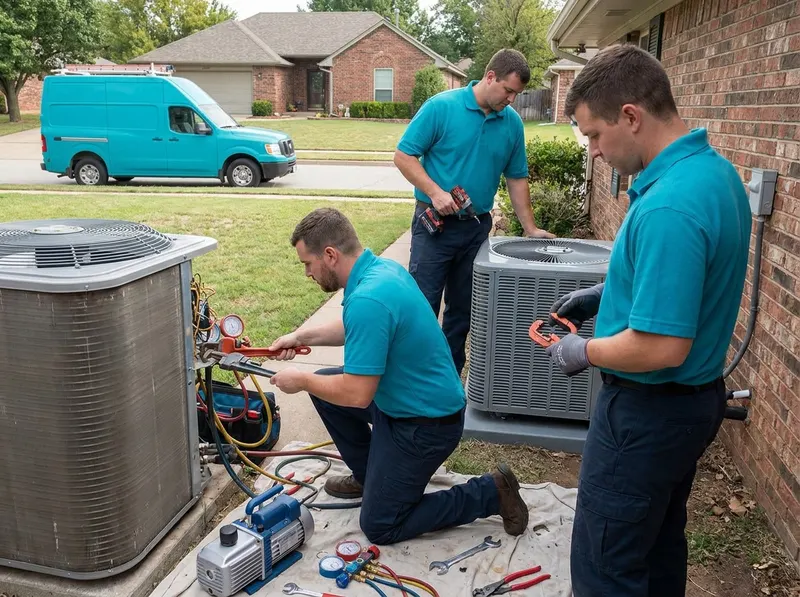
Turnkey engineering and installation of modern, high-efficiency split-system air conditioners and heat pumps engineered specifically for the Green Country climate. Every replacement begins with a comprehensive ACCA Manual J thermal load calculation to establish the precise cooling tonnage required for the structure, avoiding the humidity and short-cycling problems caused by oversized equipment. Installations feature matched outdoor condensing units and indoor cased evaporator coils running next-generation refrigerants, coupled with digital communicating controls. Duct transitions are fabricated from heavy-gauge galvanized steel and sealed with fiber-reinforced mastic to eliminate supply plenum air leakage. Technicians execute deep vacuum evacuations down below 500 microns before releasing factory refrigerant charges, verifying non-condensable removal and maximizing compressor operating lifespan.
View details →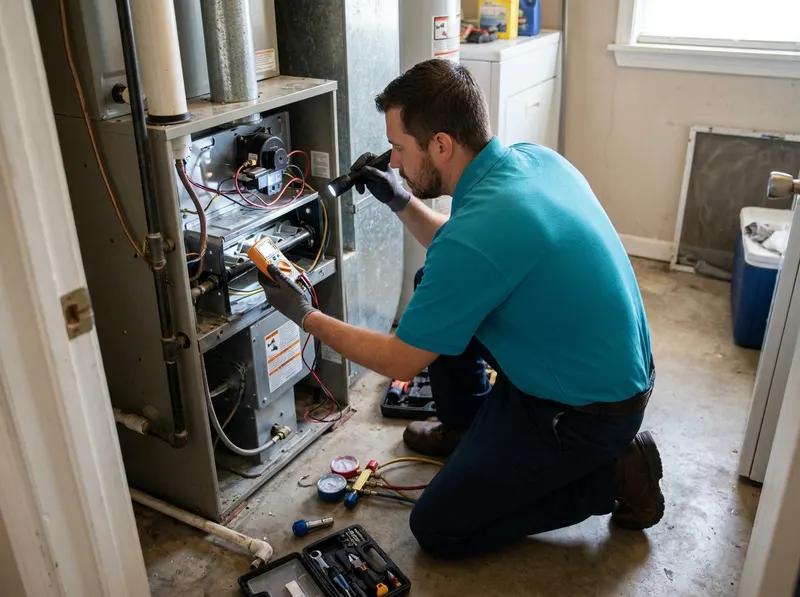
Comprehensive safety evaluations and operational diagnostics for residential natural gas and propane heating platforms. Certified technicians use digital flue gas combustion analyzers to record oxygen levels, stack temperatures, and carbon monoxide parts per million (PPM), guaranteeing safe venting and maximum combustion efficiency. Inspections utilize high-resolution optical fiber-optic cameras to examine primary and secondary heat exchanger cells for microscopic fractures, metallurgical fatigue, or rust perforations that risk venting combustion gases into living spaces. Field technicians test hot surface silicon nitride igniters, clean flame rectification sensors, adjust manifold gas pressures via digital manometers, and verify high-limit safety switches to protect your household during freezing winter conditions.
View details →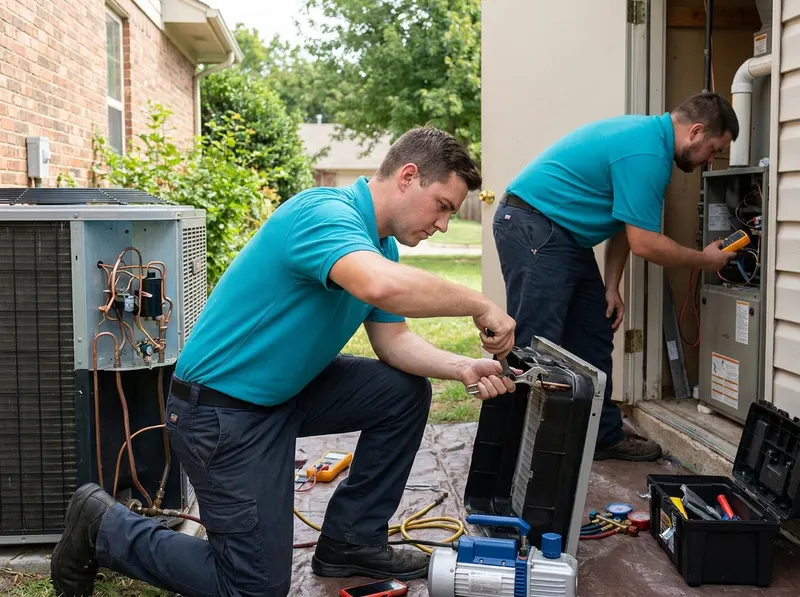
Advanced hybrid heating conversions that pair an ultra-efficient electric inverter heat pump with an auxiliary multi-stage natural gas furnace. This engineered configuration allows homeowners to capitalize on fluctuating seasonal energy prices by dynamically selecting the most economical heat source based on outdoor ambient temperatures. The inverter heat pump extracts ambient thermal energy from outdoor air down to 30°F with coefficient of performance ratings exceeding 3.0, while the secondary gas furnace supplies supplemental heating during sub-freezing Oklahoma winter storms. Custom system programming includes smart thermostat outdoor balance point calibration, dual-fuel relay board integration, and vibration-isolating condenser pad mounting.
View details →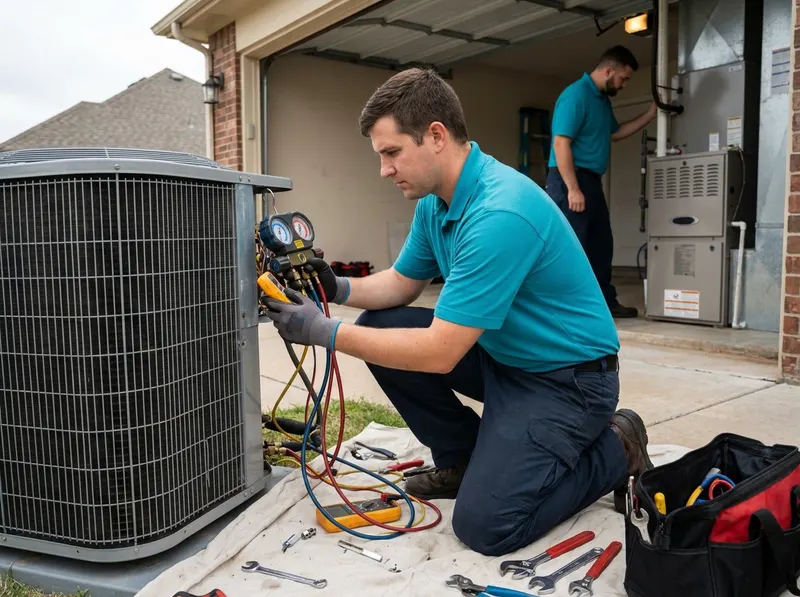
Rigorous multi-point preventative maintenance engineered to restore thermodynamic performance, lower seasonal utility bills, and prevent untimely equipment failures. Spring cooling tune-ups include non-acidic chemical cleaning of outdoor condenser fins, electrical disconnect box safety checks, compressor winding insulation resistance testing, and high-pressure chemical flushing of primary condensate drain lines to clear algae buildup. Autumn heating tune-ups include blower motor assembly cleaning, static pressure measurement across air filters, burner assembly vacuuming, gas valve shut-off testing, and electrical terminal torquing. Documented performance parameters provide property owners with exact component wear baselines to plan future equipment upgrades reliably.
View details →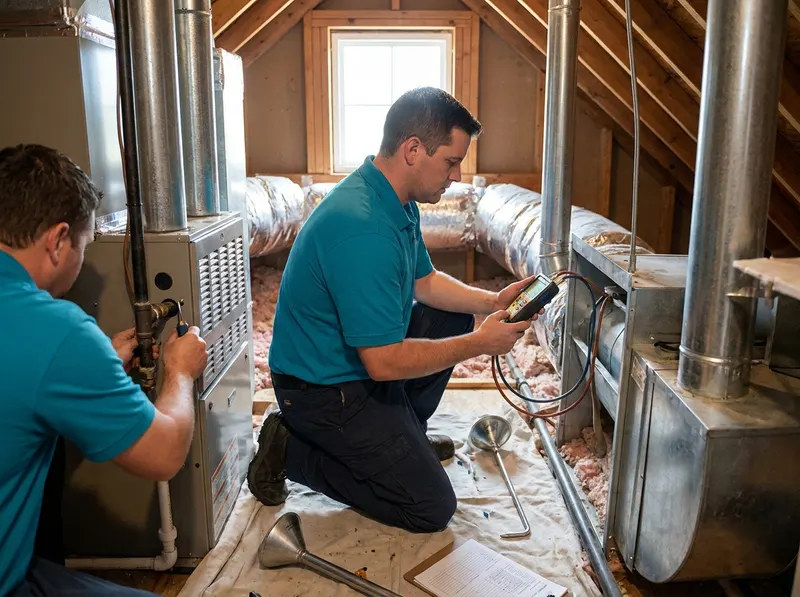
Aerodynamic evaluation and mechanical adjustment of residential supply and return duct systems designed to resolve uneven room temperatures, noisy air grilles, and blower motor strain. Technicians insert static pressure probes across filter racks, evaporator coils, and supply plenums to calculate total external static pressure (TESP) against equipment design maximums. Using digital hot-wire anemometers and balometer flow hoods, airflow CFM is measured at individual room supply registers. Technicians install manual balancing dampers, seal sheet metal seams with commercial-grade mastic, and enlarge restrictive return air drops to eliminate hot spots in upstairs bedrooms and extend blower motor service life.
View details →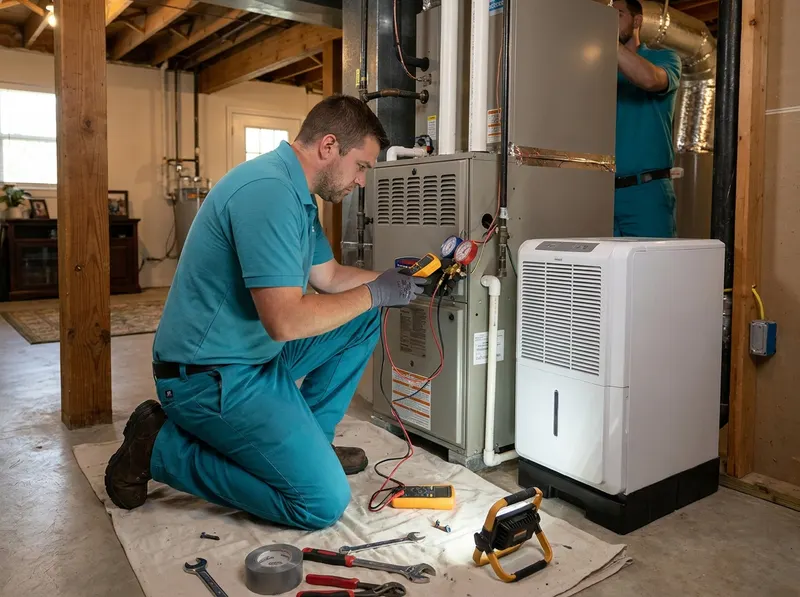
Dedicated central moisture management and hospital-grade air filtration systems integrated directly into existing residential duct networks. Whole-house dehumidifiers extract up to 100 pints of latent water vapor daily without over-cooling interior spaces, maintaining indoor relative humidity between 45% and 55% during humid Oklahoma summer months. Systems feature independent return ducting, digital humidistat controls, and dedicated gravity or pump-assisted condensate disposal. Indoor air quality upgrades include MERV 13 media air cleaners, sealed UV-C germicidal coil lamps that inhibit mold proliferation on wet evaporator coils, and balanced fresh air intake dampers to dilute indoor volatile organic compounds.
View details →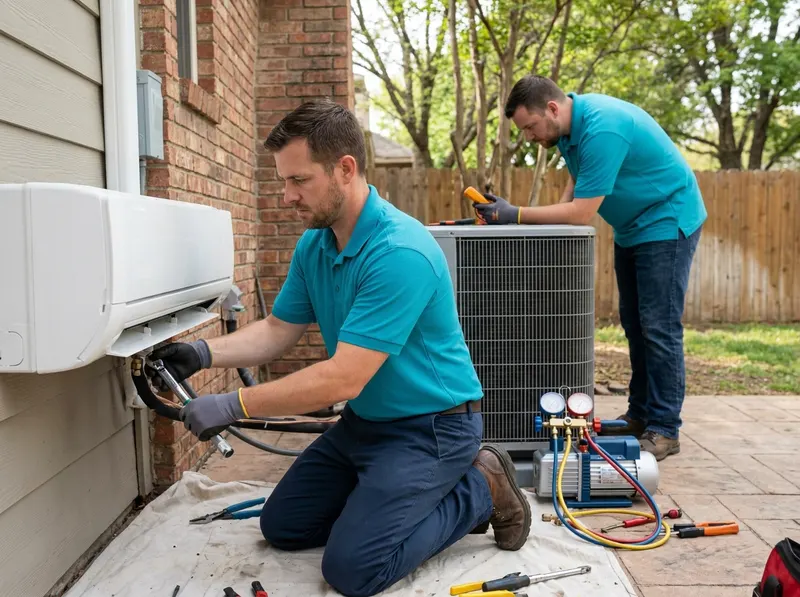
Engineered multi-zone mini-split climate control installations tailored for architectural home additions, sunrooms, detached workshops, and historic properties lacking duct access. Outdoor inverter condensers feed individual, whisper-quiet indoor wall-mounted, floor-mounted, or ceiling cassette air handlers through slim, insulated refrigerant linesets. Each indoor zone operates independently via dedicated wireless remote controls or smartphone integration, eliminating energy waste in unoccupied rooms. Technicians manage all line-voltage electrical disconnect installations, flare-connection pressure testing with dry nitrogen up to 500 PSI, and aesthetic exterior line-hide conduit covers to maintain architectural appeal.
View details →HVAC Tulsa is a precision climate control service that repairs, maintains, and installs residential heating, ventilation, and air conditioning systems across Tulsa, Oklahoma.
You get a firm, itemized quote for your hvac before any work begins — no surprises, no pressure.
Careful prep, tidy work, and a full cleanup when we are done. We treat your home and belongings like our own.
The same trusted, background-checked team from the first call to the final check.
Selecting the proper HVAC configuration requires matching mechanical equipment specifications directly to your home's thermal building envelope, existing ductwork static pressure capacity, and seasonal load requirements. If your central cooling system is under ten years of age and experiences a sudden operational stoppage, choose component-level mechanical repair; replacing an isolated dual-run capacitor, contactor, condenser fan motor, or thermostatic expansion valve restores full thermodynamic performance while preserving capital. If your air conditioner or heat pump exceeds twelve years in service, relies on obsolete R-22 chemical refrigerant, or exhibits severe compressor motor winding breakdown, choose complete split-system replacement with a modern R-454B or R-32 platform; the trade-off involves higher upfront capital expenditure in exchange for high SEER2 seasonal electrical efficiency, zero ozone-depleting substances, and a fresh 10-year factory parts warranty. If you reside in a historic property in Midtown Tulsa, Maple Ridge, or Riverview with boiler-fed radiator heat and zero existing interior ductwork chases, choose a multi-zone ductless mini-split system; this configuration delivers targeted room-by-room thermal zoning without requiring invasive structural modifications, though it places visible indoor air handling units on interior walls. If your home exhibits intense second-story temperature spikes during July afternoons alongside elevated indoor relative humidity above 60%, choose an inverter-driven variable-capacity split system integrated with a dedicated whole-home dehumidifier; the trade-off is a higher initial investment compared to traditional single-stage equipment, but it maintains static pressure stability, eliminates moisture saturation, and stabilizes temperatures within one degree across all living zones. If you heat with natural gas and seek lower winter utility bills, choose a dual-fuel hybrid heat pump paired with an auxiliary 96% AFUE gas furnace; this setup maximizes operational economy by running the electric heat pump during mild 40°F to 55°F autumn weather and switching over to natural gas combustion only during sub-freezing arctic cold snaps.
Every project gets a firm, written price after a free on-site visit. Ranges below for orientation.
Tell us about your hvac job and we'll send a clear, written quote — usually the same day. Or just call and talk to a real tulsa pro.

Tulsa experiences a volatile continental climate characterized by severe Green Country humidity spikes from mid-May through August, with ambient heat indexes regularly exceeding 105°F along the Arkansas River basin and near local parks like Gathering Place and Woodward Park and Tulsa Rose Garden. This heavy latent moisture load forces residential air conditioning compressors to run extended operational cycles, driving up head pressures, stressing starting capacitors, and filling interior condensate lines with rapid biological slime growth. In contrast, winter brings sudden Canadian cold fronts sweeping through Tulsa County, dropping temperatures into the single digits and placing heavy demands on natural gas furnaces and heat pump electric resistance strips. In historic architectural districts like Maple Ridge, Florence Park, and Owen Park, vintage structural layouts feature uninsulated wall cavities, high ceilings, and undersized original duct runs that require careful static pressure calculation and zoned airflow management to prevent thermal stratification between floors. Furthermore, homeowners throughout the metro area can capitalize on local energy conservation programs by combining Public Service Company of Oklahoma (PSO) high-efficiency rebates and Oklahoma Natural Gas (ONG) heating incentives with modern heat pump and condensing furnace replacements, all executed under Oklahoma Construction Industries Board mechanical safety mandates.
 Air MatrixHVAC